What is shared container shipping?
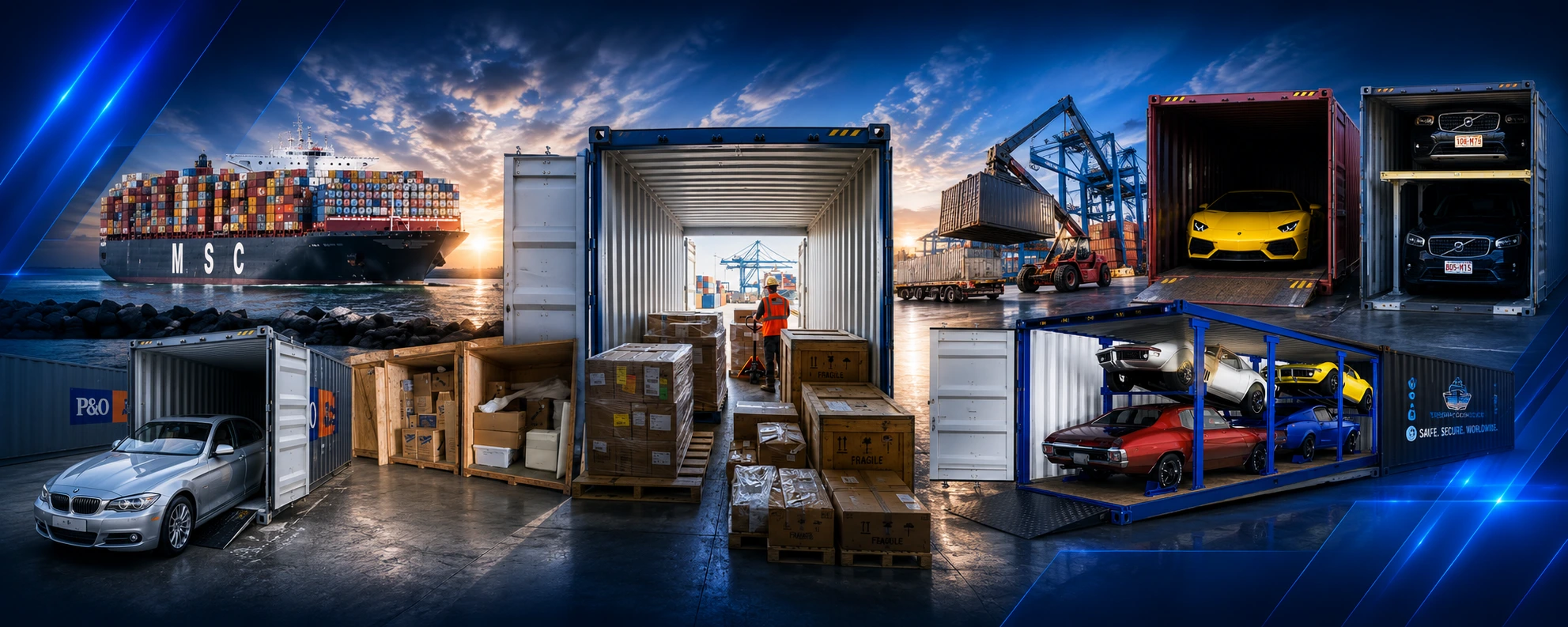
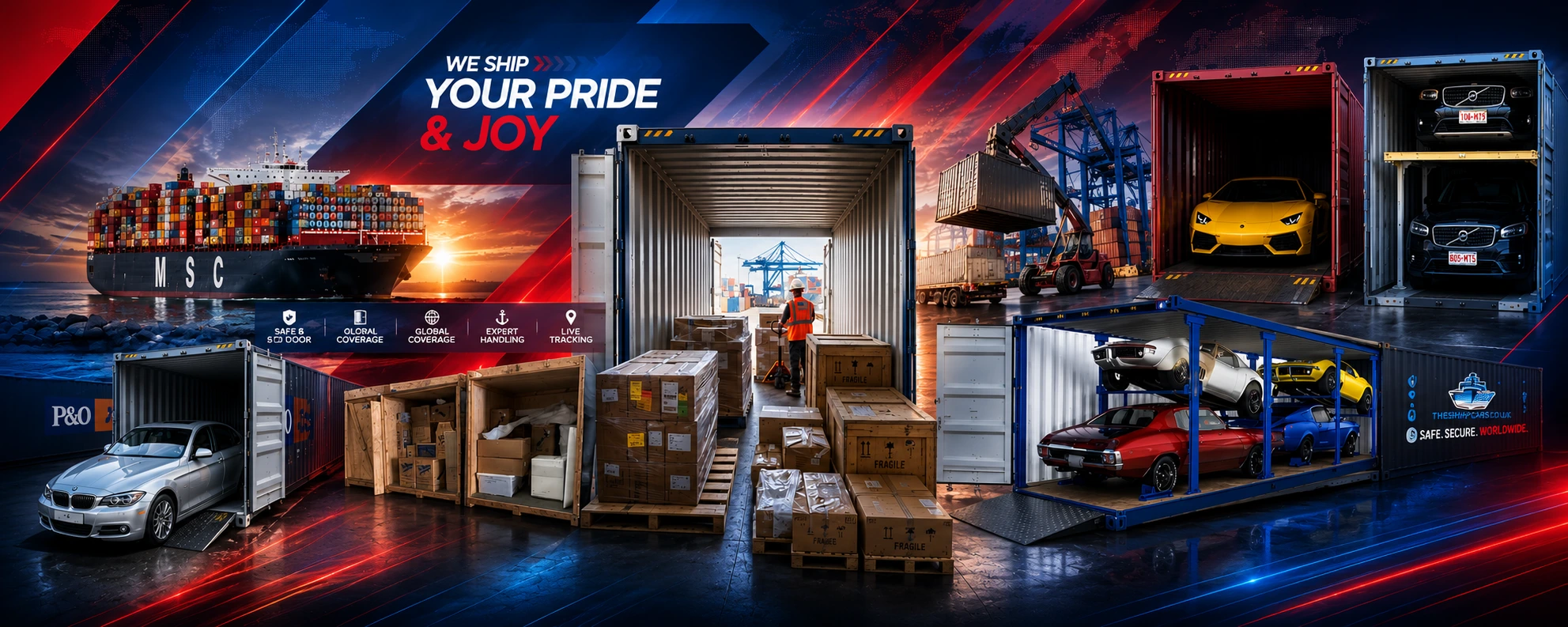
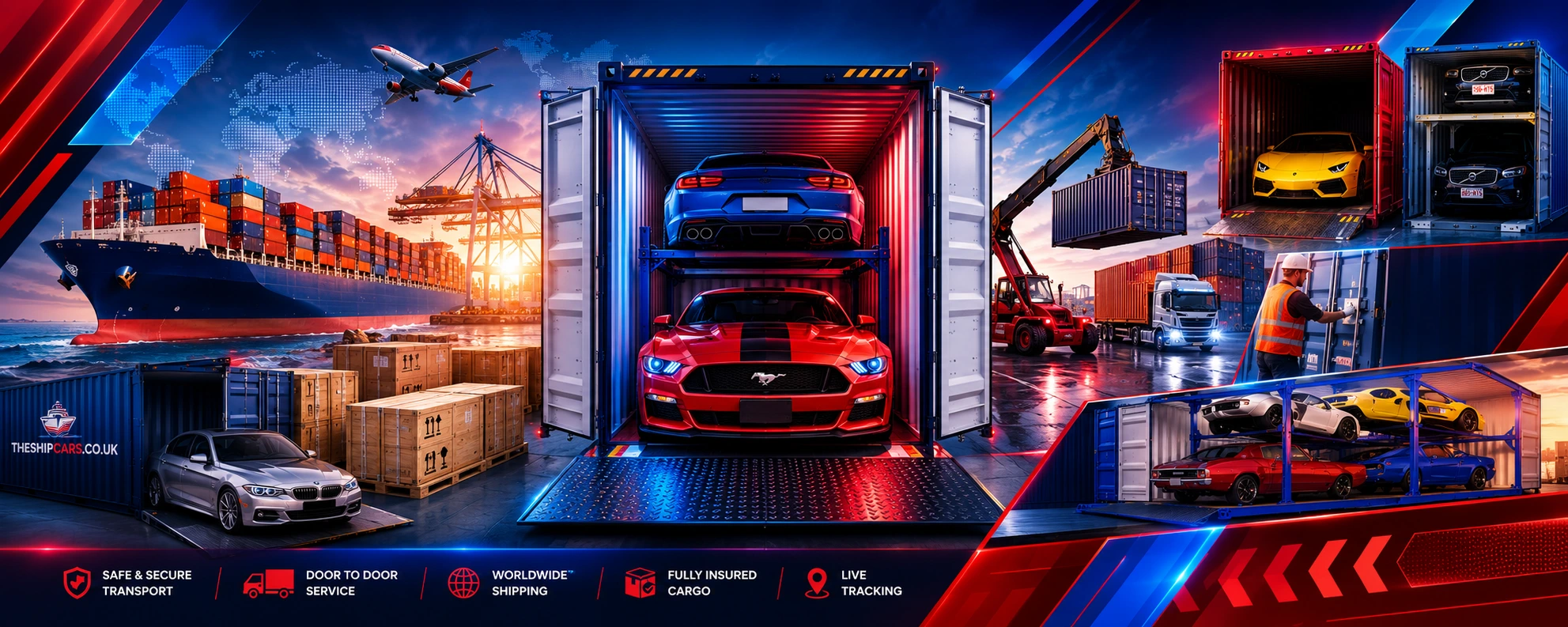
Shared container shipping — also known as groupage or LCL (Less than Container Load) — is the most cost-effective way to send freight internationally from the United Kingdom. Instead of paying for an entire 20ft or 40ft container, your cargo is consolidated with other customers' goods heading to the same destination. You pay only for the cubic metres (CBM) of space your shipment occupies, plus a small handling charge. For UK exporters with anything from a single pallet up to roughly 25 CBM, sharing a container typically saves 40–70% compared with a sole-use booking and avoids the complication of having to fill an entire box yourself.
Groupage shipping explained
Groupage shipping is the industry term for ocean freight consolidation. A freight forwarder collects cargo from multiple shippers, books a sailing on a weekly liner service from the UK to the destination port, loads everything into one container at a UK consolidation depot, and ships it as a single consignment under a master Bill of Lading. Each customer receives a house Bill of Lading covering their own goods. Groupage suits one-off household removals, repeat e-commerce stock replenishments, charity donations, and any business that ships part-loads internationally on a regular basis without filling a container.
LCL shipping guide
LCL shipping uses the same underlying mechanics as groupage but is the language preferred by carriers and freight forwarders outside Europe. LCL freight is billed by weight or measure (W/M) — whichever is greater between 1 CBM and 1,000 kg. The headline rate quoted to you normally covers depot handling in the UK, loading, ocean freight and destination port handling at the Container Freight Station (CFS). Surcharges to look out for include the Bunker Adjustment Factor (BAF), Currency Adjustment Factor (CAF), ISPS security fee and Terminal Handling Charges (THC). Our published per-CBM prices include all standard surcharges so the quote you see is the price you pay.
R-Rak vehicle shipping
R-Rak shipping uses a steel racking system to stack up to four cars inside a single 40ft shipping container. It is the most efficient way for UK dealers, exporters and individuals to send multiple vehicles in one consignment. R-Rak is also popular with classic-car owners moving collections overseas and with families shipping a second car alongside a household removal. The racks bolt into the container floor and use ratchet straps and wheel chocks to immobilise each vehicle — there is no metal-on-paint contact and no risk of vehicles shifting in transit. R-Rak typically costs 30–50% less per car than a sole-use container.
Vehicle shipping in shared containers
Cars, motorcycles, 4x4s, vans and light commercial vehicles all ship safely in shared containers from the UK. Cars are strapped flat to the container floor (one or two per container depending on size) or stacked on R-Rak frames. Motorcycles are typically crated, palletised or floor-strapped inside the container. Before shipping, vehicles must be cleaned externally and internally, fuel drained to below a quarter tank, and the original V5C presented at HMRC for the export stamp. See the shared car shipping guide and shared motorcycle shipping guide for full preparation checklists by destination.
Household shipping and personal effects
Used household effects, furniture, white goods, clothing and electronics make up the majority of personal-shipper volume in shared containers. Items should be packed into double-walled cartons or onto stretch-wrapped pallets before drop-off at our depot — sea-freight conditions are humid and vibrating, so domestic packing is rarely sufficient. Households moving to Cyprus, Australia, Canada, the USA, New Zealand and the UAE often qualify for duty-free import as part of a Transfer of Residence application; we will brief you on the destination paperwork at quote stage. For a CBM-by-room estimate, use the container space guide.
Commercial cargo and B2B shipments
UK SMEs use shared containers to move pallets of stock to overseas warehouses, samples to distributors, machinery to project sites and trade-show kit between events. Commercial cargo benefits especially from the per-CBM pricing model because shipment sizes rarely match neatly to full containers. Our depot teams accept palletised cargo via curtain-side or tail-lift delivery, scan and re-measure every consignment on arrival, and issue a packing receipt the same day. Customs clearance is handled end-to-end where required, and consolidated commercial invoices simplify duty calculations at the destination.
Customs and documentation
Every UK export is cleared twice: once leaving the UK and once entering the destination. UK export declarations are filed with HMRC at the point of loading and require the Bill of Lading, commercial or proforma invoice, packing list and (for vehicles) the V5C and NOVA. At the destination, your consignee — or our destination agent — presents the same paperwork to local customs and pays any duty, VAT or GST. Our documentation hub covers every form by destination, and the operations team prepares the Bill of Lading and HMRC entry as part of every booking.
Popular shipping destinations
We sail weekly from UK ports to more than 70 destinations. The most popular routes for shared containers and groupage are Cyprus, Dubai, Nigeria, Ghana, Kenya, South Africa, Australia, New Zealand, Canada and the USA. Each destination page lists current per-CBM benchmarks, transit times, ports of arrival and any country-specific paperwork. For the full directory of routes, see the destinations page.
Shared container cost calculator
The fastest way to price a shipment is to use the shared container cost calculator. Enter your destination, cargo type and dimensions and the tool returns your total CBM, the percentage of a 40ft container you would occupy, an indicative freight price, and a realistic transit time. Submit your details and the operations team confirms a binding quote within the hour. Need to compare timings? The transit time calculator shows door-to-door windows for every route.
Why choose shared containers from the UK?
Shared containers solve the two biggest problems UK shippers face when sending part-loads internationally: paying for empty space and waiting weeks for a container to fill. With fixed weekly UK consolidations from London, Felixstowe and Southampton, there is no waiting list and no minimum order above 1 CBM. Pricing is transparent, the documentation is handled end-to-end, and you only pay for the space you use. Whether you are exporting a single motorcycle, moving a household to Cyprus, sending three cars to Dubai via R-Rak, or replenishing distributor stock in Lagos, shared container shipping is the most cost-effective and fastest-to-book option from the UK.