How To
CBM Calculation Guide For UK Shared Container Shippers
How to calculate CBM (cubic metres) correctly for shared container, groupage and LCL freight from the UK — worked examples for boxes, furniture and pallets.
Published 16 March 2026 · 5 min read
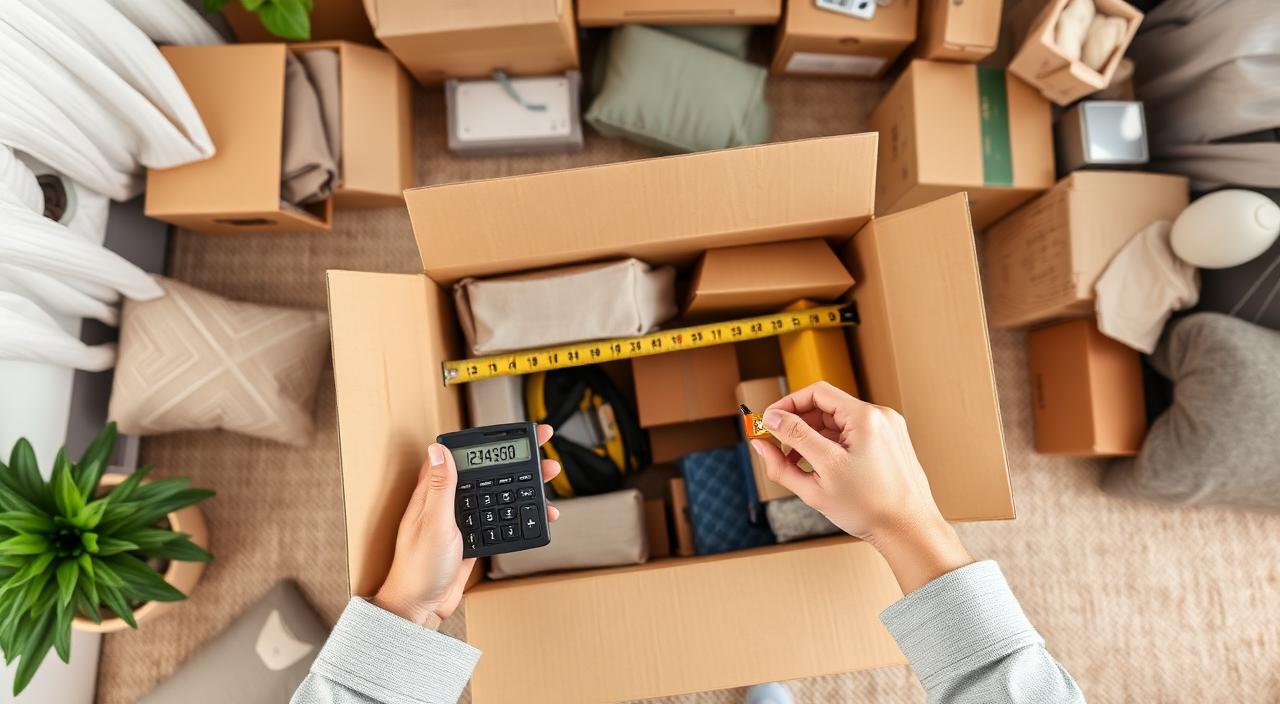
Almost every line on a shared container invoice depends on one number: CBM. Get it wrong and you either overpay (over-estimate) or face a last-minute re-quote (under-estimate). This guide explains exactly how to calculate CBM for the cargo UK shippers actually send.
The formula
CBM = length (m) × width (m) × height (m). For multiple items, calculate each separately then add. Always use the longest dimension on each axis — the irregular shapes that surround your box still occupy space in the container.
For pallets, calculate the pallet footprint (1.2 × 1.0 m for a UK standard) by the total stack height including the pallet itself. A 1.6 m high stack on a UK pallet is 1.92 CBM.
Worked example — household removal
20 moving boxes at 0.6 × 0.4 × 0.4 m = 0.096 CBM each × 20 = 1.92 CBM. One sofa at 2.1 × 0.9 × 0.9 m = 1.7 CBM. One bed frame disassembled at 2.0 × 1.0 × 0.2 m = 0.4 CBM. Mattress at 2.0 × 1.5 × 0.25 m = 0.75 CBM. Wardrobe (flat-packed) at 2.0 × 1.0 × 0.3 m = 0.6 CBM.
Total: 5.37 CBM. Round up to 5.5 CBM for the quote, and budget 6 CBM to cover any items added on packing day. The container space calculator does this addition for you.
Vehicles
Cars are priced per unit, not by CBM, in shared container shipping — typically a small saloon occupies 10–12 CBM, an SUV 15–18 CBM. Use the per-unit price your forwarder quotes rather than calculating CBM yourself.
Motorbikes are sometimes quoted per unit (£250–£500 to most destinations) and sometimes per CBM (typically 0.8–1.4 CBM uncrated). Ask explicitly.
Volumetric weight — when CBM is not the bill
Air and courier rates are quoted on chargeable weight, which is the higher of actual kg and volumetric kg. Volumetric kg = (length × width × height in cm) / 5000 for air, /6000 for courier.
Sea LCL almost always charges by CBM (with a 1,000 kg/CBM equivalence cap). For sea freight, CBM is the number that matters — focus on packing density rather than weight.
How to reduce CBM without removing items
Disassemble bed frames, dining tables, shelving. Remove drawers and pack contents inside them. Nest chairs into one another. Vacuum-bag clothing, duvets and pillows — clothing volume reduces by 60–70%. Pack books and dense items in small boxes to keep them stackable.
These tactics routinely save 25–35% of CBM on a typical household removal. See the full container packing guide for a room-by-room breakdown.
Key takeaway
CBM is a five-minute exercise with a tape measure and a calculator. Get it right and your shared container quote is accurate; get it wrong and the consolidator gets to set the price on the day. Always over-estimate slightly and pack densely.
More from the blog
How To Save Money Shipping From The UK In 2026
Ten proven tactics UK shippers use to cut shared container, groupage and LCL freight costs in 2026 — without sacrificing transit time or security.
ComparisonsShared Container vs Courier: When Each Service Wins
Shared container, parcel courier, air freight — a side-by-side comparison for UK shippers on cost, transit time, weight limits and customs complexity.
GroupageGroupage Shipping Explained: A 2026 Guide For UK Shippers
What groupage shipping actually is, how UK consolidators build a groupage box, current per-CBM costs, transit times and what can and can't travel.
Related shipping resources
- service
Shared Container Shipping
shared container shipping
- service
Groupage Shipping
groupage shipping
- service
LCL Shipping
LCL shipping
- service
R-Rak Vehicle Shipping
R-Rak vehicle shipping
- tool
Get a Shipping Quote
free shipping quote
- tool
Transit Time Calculator
transit time calculator
- tool
CBM Calculator Guide
CBM calculator
- cost
Shared Container Shipping Cost
shared container shipping cost
- cost
Groupage Shipping Cost
groupage shipping cost