Vehicles
Shipping A Car From The UK: A Step-By-Step 2026 Guide
How to ship a car from the UK in 2026 — Ro-Ro vs shared container, costs, documents, V5C requirements and destination clearance for popular routes.
Published 10 April 2026 · 7 min read
Shipping a car overseas from the UK is straightforward when you know the sequence — but every year thousands of exports are delayed by missing paperwork or the wrong shipping method. This is the eight-step process we walk customers through, from choosing Ro-Ro versus container to clearing the vehicle at destination.
Step 1 — Choose Ro-Ro or shared container
Ro-Ro (roll-on, roll-off) is cheapest for a single drivable car to major ports — typically £700–£1,400 to West Africa, £900–£1,600 to the Middle East. The car is driven onto a vehicle vessel and lashed on a deck.
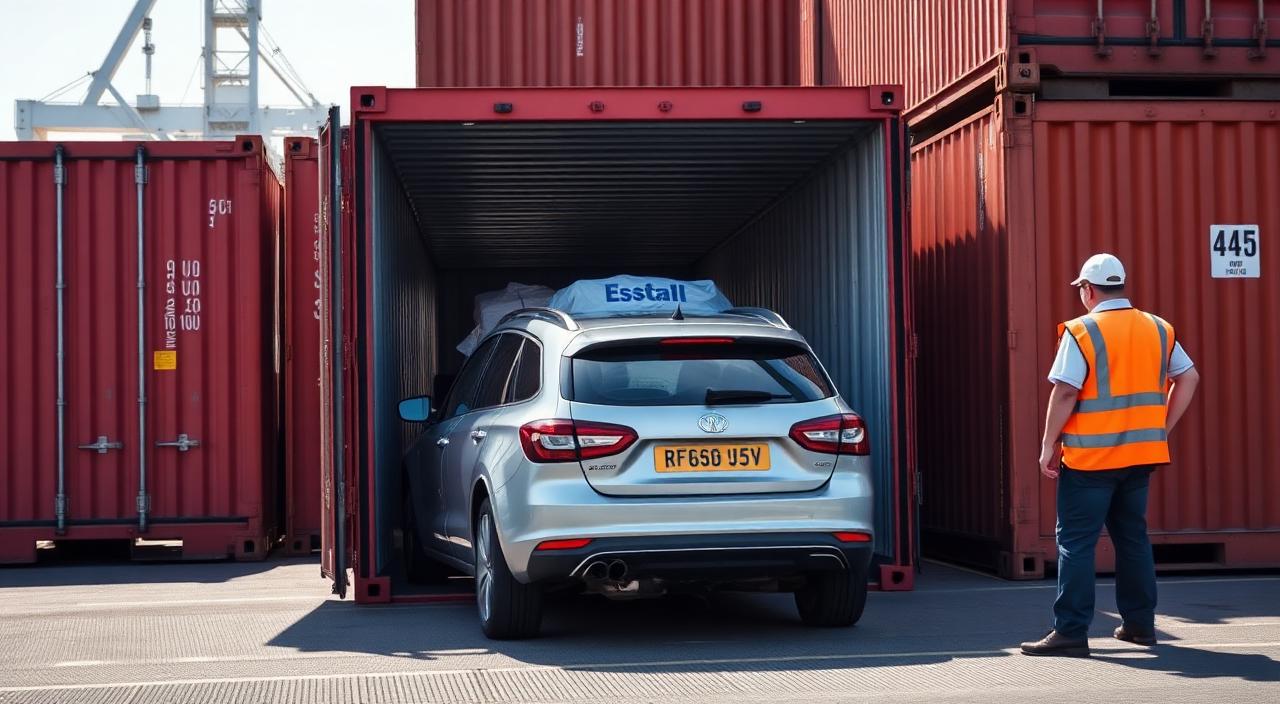
Shared container is preferred when you want to ship personal effects with the car, when the destination is inland from a Ro-Ro port, or when the vehicle is non-running. Shared container also offers better security against theft and weather. See the shared car shipping guide.
Step 2 — Confirm the destination accepts the vehicle
Many countries restrict imports by vehicle age (e.g. Kenya bans cars over eight years old; Pakistan limits used imports), emissions standard or steering side. Confirm with the destination customs authority — or ask your forwarder — before you book freight.
Non-compliant vehicles arriving at destination face re-export at the shipper's cost. This is the single most common expensive mistake in vehicle export.
Step 3 — Get the V5C in order
You need the original V5C registration document (the green logbook). If you are still paying finance on the car, your finance company must release the V5C in writing before export. Photocopies are not accepted by HMRC for export clearance.
Notify the DVLA of permanent export by sending the V5C/4 section to Swansea, or you will continue to be liable for road tax and any future fines.
Step 4 — Prep the vehicle
Fuel tank no more than one quarter (a sea-freight safety requirement; many destinations are stricter). Battery secure and disconnected if shipping in a container. No personal items in the car for Ro-Ro shipments — every Ro-Ro line strictly prohibits loose contents.
For container shipments, you may load personal effects in the cabin and boot up to the destination customs limits. Photograph the car inside and out before drop-off — these photos protect you in any insurance claim.
Step 5 — Book and pay UK-side
Get a quote that includes UK port charges, ocean freight, marine insurance and an estimate of destination charges. Pay the UK invoice; destination charges are typically settled with the destination agent before the car is released.
Use the calculator for a live indicative price including R-Rak options if you are shipping more than one car.
Step 6 — Customs export entry
Your forwarder files the UK export entry on the CDS system using the V5C, your passport details and a commercial or proforma invoice (used cars are usually declared at market value).
You will be issued a Bill of Lading once the vessel sails. The original BoL is required at destination to claim the car — do not lose it.
Step 7 — Vessel transit and tracking
Transit times: West Africa 21–32 days, East Africa 28–40 days, Middle East 18–28 days, Australia 35–55 days, North America 12–18 days. Most lines publish online tracking against the BoL number.
Allow buffer for de-grouping and clearance — see the transit time calculator for door-to-door estimates.
Step 8 — Destination clearance and collection
Present the original Bill of Lading, V5C, passport and any vehicle-specific import certificates to the destination agent. They will pay port handling and file the import entry; you settle duties and clearance fees and collect the car.
Budget realistically — destination duty on a used car can be 20–60% of value in some African and Asian markets, plus port and clearance fees of £200–£600. These are the buyer's responsibility, not the UK forwarder's.
Key takeaway
Vehicle export from the UK is a paperwork business as much as a logistics one. Get the V5C, the destination eligibility rules and the destination duty schedule right, and the actual shipping is the easy part.
More from the blog
How To Save Money Shipping From The UK In 2026
Ten proven tactics UK shippers use to cut shared container, groupage and LCL freight costs in 2026 — without sacrificing transit time or security.
ComparisonsShared Container vs Courier: When Each Service Wins
Shared container, parcel courier, air freight — a side-by-side comparison for UK shippers on cost, transit time, weight limits and customs complexity.
GroupageGroupage Shipping Explained: A 2026 Guide For UK Shippers
What groupage shipping actually is, how UK consolidators build a groupage box, current per-CBM costs, transit times and what can and can't travel.
Related shipping resources
- service
Shared Container Shipping
shared container shipping
- service
Groupage Shipping
groupage shipping
- service
LCL Shipping
LCL shipping
- service
R-Rak Vehicle Shipping
R-Rak vehicle shipping
- tool
Get a Shipping Quote
free shipping quote
- tool
Transit Time Calculator
transit time calculator
- tool
CBM Calculator Guide
CBM calculator
- cost
Shared Container Shipping Cost
shared container shipping cost
- cost
Groupage Shipping Cost
groupage shipping cost