Groupage
Groupage Shipping Guide
UK groupage shipping guide — how part-loads are consolidated, current per-CBM pricing, transit times, documents, customs and how to book a groupage container.

UK groupage shipping guide — how part-loads are consolidated, current per-CBM pricing, transit times, documents, customs and how to book a groupage container.
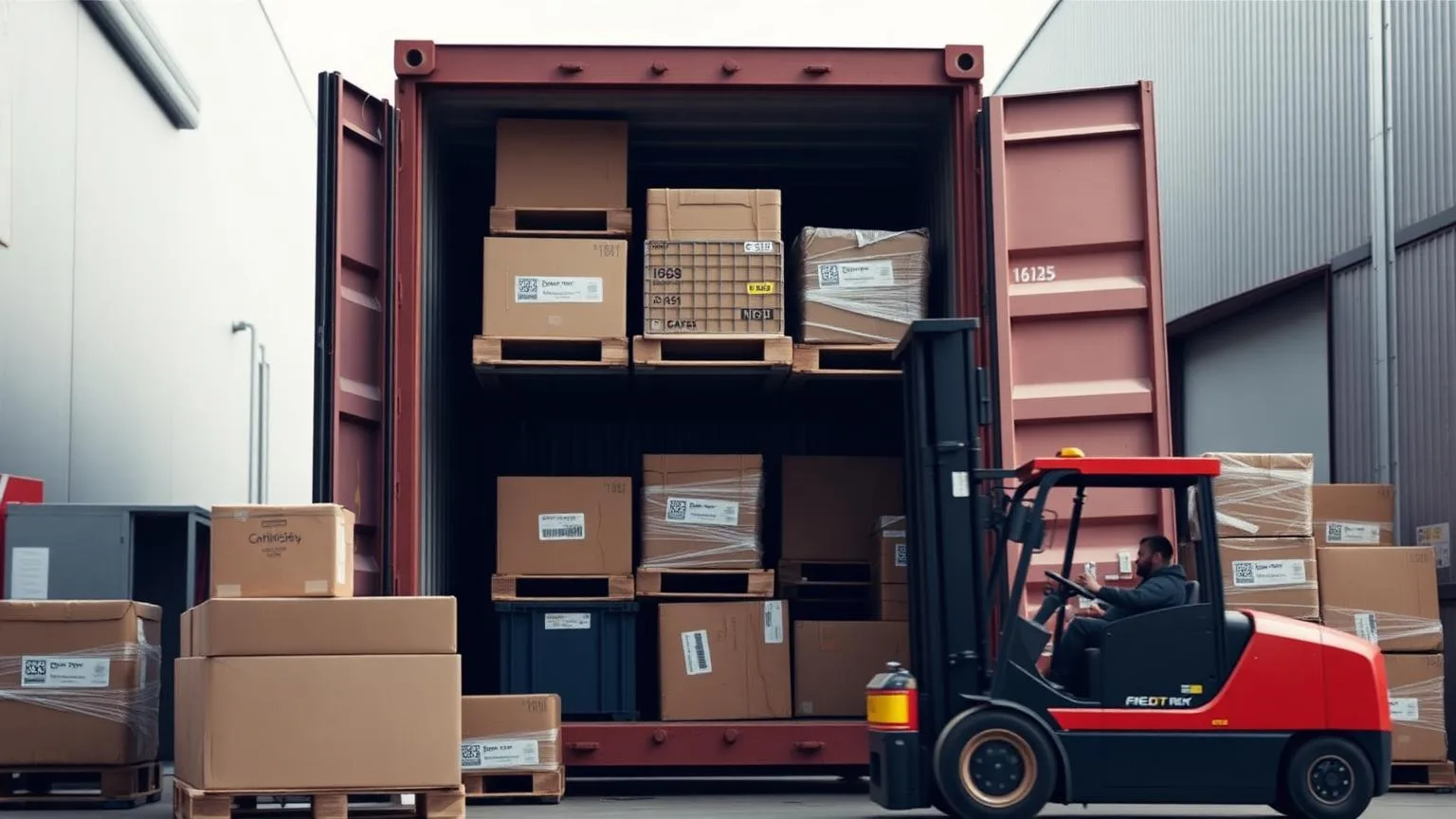
Groupage shipping is the freight industry term for consolidating multiple smaller shipments into one shared shipping container. It is the European equivalent of LCL (Less than Container Load) and it underpins almost all part-load ocean freight from the UK. This guide explains how groupage shipping works step by step, who it suits, how much it costs per CBM in 2026, transit times to major destinations, the documents you need, customs clearance, and how to book a groupage container from the UK.
Groupage shipping is a freight consolidation service. Instead of one customer hiring a whole container, a freight forwarder collects cargo from many customers heading to the same destination port, loads it all into a single container, and ships it as one consignment. Each customer is billed for the cubic metres (CBM) of space their goods occupy plus a small handling fee.
Groupage is identical in principle to shared container shipping and LCL shipping — the three terms are used interchangeably in the UK. The key idea is the same: pay per CBM, not per container.
Groupage is particularly cost-effective for one-off or low-frequency shipments. Read the dedicated groupage shipping costs guide for full pricing benchmarks.
Groupage shipping breaks down into five clear stages. Most customers only need to interact with the forwarder during the booking and drop-off stages — everything else is handled behind the scenes.
Groupage suits anyone with less than 25 CBM to ship. Common customer profiles include expats with a single pallet of personal effects, individuals exporting a car or motorbike, online sellers sending stock to overseas warehouses, charities sending donations, and SMEs sending samples or part-loads to overseas customers.
If your cargo is above 25 CBM, a full container load is usually cheaper — see the shared container vs full container comparison. For very small shipments (under 1 CBM or under 50 kg), parcel or air freight may be more economical.
A full 20ft container holds around 33 CBM and a 40ft container around 67 CBM. The price per CBM for a full container is normally lower than groupage, but you have to pay for all the space — used or not. The break-even point for most routes is between 15 and 25 CBM. Below that, groupage wins on cost; above it, FCL wins on both cost and speed.
Groupage rates are quoted per cubic metre or per W/M (weight or measure — whichever is greater between 1 CBM and 1,000 kg). Vehicles are priced per unit. The headline price you see in a quote usually covers UK depot handling, container loading, ocean freight and destination port handling. Local delivery, customs brokerage and import duties are extra.
| Route | Typical groupage rate | Minimum |
|---|---|---|
| UK to Cyprus | from £55/CBM | 1 CBM |
| UK to Dubai / UAE | from £85/CBM | 1 CBM |
| UK to Nigeria / Ghana | from £110/CBM | 1 CBM |
| UK to Kenya / South Africa | from £130/CBM | 1 CBM |
| UK to USA / Canada | from £95/CBM | 1 CBM |
| UK to Australia | from £160/CBM | 2 CBM |
Groupage transit times are longer than full container shipments because the consolidator waits for the container to fill before sealing it. For most routes, add 5–10 days for consolidation and 5–7 days for destination clearance to the port-to-port estimate. See the transit time guide for route-by-route detail.
Every groupage shipment is cleared twice: out of the UK and into the destination country. UK export clearance is filed with HMRC at loading. At the destination, your consignee (or our destination agent) presents the Bill of Lading, invoice and packing list to local customs and pays any duty and VAT/GST.
For consolidated cargo, customs at the destination is usually completed at a Container Freight Station (CFS) where the container is unpacked and individual shipments are released to their respective importers. Allow 5–7 working days for this process on most routes.
Successful groupage shipping comes down to preparation. The cargo you hand over to the depot is the cargo that arrives at the destination — there is no opportunity to repack mid-voyage. Treat your shipment as if it will be handled six times (truck, forklift, depot crew, container loader, destination CFS, last-mile driver), because in most cases it will be. Use double-walled boxes, fill voids with packing paper or air pillows, and label every carton with your name, destination city and Bill of Lading number once issued.
Book your collection slot at least seven working days before the published sailing date. UK consolidation depots cut off receiving 48–72 hours before a vessel departs, and missing the cut means rolling to the following week. If your shipment includes vehicles, allow extra time for the V5C and export-declaration checks — see our shared car shipping guide and R-Rak vehicle shipping guide for vehicle-specific lead times.
Always insure cargo above £1,000 declared value. Standard carrier liability under the Hague-Visby Rules is capped at roughly £600 per package or 2 SDR per kg — whichever is greater — and that rarely covers the replacement cost of household effects, electronics or vehicles. Full marine all-risks insurance typically costs 1.5–2.5% of declared value and pays out on the invoice value plus 10% (CIF + 10%), which is the maritime industry standard.
Sea freight is a wet, vibrating, high-humidity environment. Container interiors can swing between 20°C and 50°C across a single voyage and condensation ("container rain") is normal. Pack with that in mind — anything that can rust, mould or absorb moisture needs barrier protection.
We see the same handful of preventable mistakes derail otherwise straightforward groupage shipping shipments week after week. Most cost the shipper either time (a missed sailing, a port-storage charge) or money (an uninsured loss, a re-handling fee). The good news: every one of them is avoidable with five minutes of planning.
A realistic timeline for groupage shipping from the UK runs from quote to delivery in three predictable phases: pre-shipment (1–2 weeks), ocean transit (2–9 weeks depending on destination) and destination clearance plus last-mile (1–2 weeks). Skipping any phase compresses risk into the others — most "lost time" complaints we see come from shippers who booked the freight before they had finished packing.
In the pre-shipment phase, finalise your packing list and commercial invoice, complete any HMRC export formalities and confirm the collection address. The freight forwarder needs the final piece-count and dimensions 72 hours before sailing. During ocean transit there is nothing to do beyond tracking — your Bill of Lading is your proof of shipment and your release document at the destination port.
Destination clearance starts the moment the vessel arrives. Most countries allow 3–5 free storage days at the port; after that, demurrage and detention apply. Make sure your consignee is ready with funds for duty and VAT/GST and has the original Bill of Lading (or a Telex Release confirmation) in hand. See the transit time guide for route-specific port-to-port estimates.
My Shared Container is a UK-based shared-container freight specialist operating weekly consolidation services from London, Felixstowe and Southampton to more than 70 destinations worldwide. Every booking includes UK collection, depot handling, ocean freight, destination port handling and document support as standard — there are no hidden line-items on quote day.
Customers choose us for groupage shipping because we publish transparent per-CBM pricing, confirm space within the hour and assign a single point of contact for the entire shipment. Our depot teams are trained in vehicle securing, household-effects packing and palletised consolidation, so the same supplier handles your cargo from arrival to vessel cut-off — there is no hand-off risk between sub-contractors.
Compare us to a typical freight forwarder by reading the shared container shipping cost guide, then run the calculator for your route. If the numbers work, we confirm by email and WhatsApp the same day.
We sail weekly shared containers from UK ports to dozens of destinations worldwide. The most popular routes for groupage shipping are Cyprus, Dubai, Nigeria, Ghana, Kenya, South Africa, Australia, New Zealand, Canada and the USA — but we cover more than 70 countries in total.
For destination-specific transit times, ports of arrival and pricing benchmarks see our pages for Cyprus, Dubai, Nigeria, Ghana, Kenya, South Africa, Australia, New Zealand, Canada and the USA. The full directory is on our destinations page.
Ready to book? Use the shared container CBM and cost calculator for an instant estimate, then submit your details for a confirmed quote within the hour. You can also message us on WhatsApp at +44 7717769925 or email sales@ascopeshipping.co.uk.
Need to compare options first? Read the groupage shipping guide, the LCL shipping guide, or browse our full destinations directory to see weekly sailings for groupage shipping.
Get an instant estimate and a confirmed quote within the hour.
Get Instant QuoteGroupage Shipping
groupage shipping
LCL Shipping
LCL shipping
Shared Container Shipping
shared container shipping
R-Rak Vehicle Shipping
R-Rak vehicle shipping
Get a Shipping Quote
free shipping quote
Transit Time Calculator
transit time calculator
CBM Calculator Guide
CBM calculator
Shared Container Shipping Cost
shared container shipping cost
Groupage Shipping Cost
groupage shipping cost